










Your glass production line is grinding to a halt, and nobody seems to understand why. You've checked the obvious culprits—raw materials are fine, workforce is intact, and equipment appears functional. Yet your throughput continues to lag behind targets. The real problem likely sits right in front of you: your glass furnace is working against you, not for you.
Understanding Glass Furnace Efficiency in Modern Manufacturing
Glass furnace performance directly determines your production capacity. When a melting furnace operates below optimal conditions, it creates a cascading effect throughout your entire operation. The furnace is the heart of glass production, and when it falters, everything downstream suffers.
Most plant managers don't realize that a 5% reduction in furnace efficiency translates to a 15-20% loss in overall production speed. This isn't just about energy consumption—it's about how effectively your furnace transforms raw materials into quality glass at the required pace.
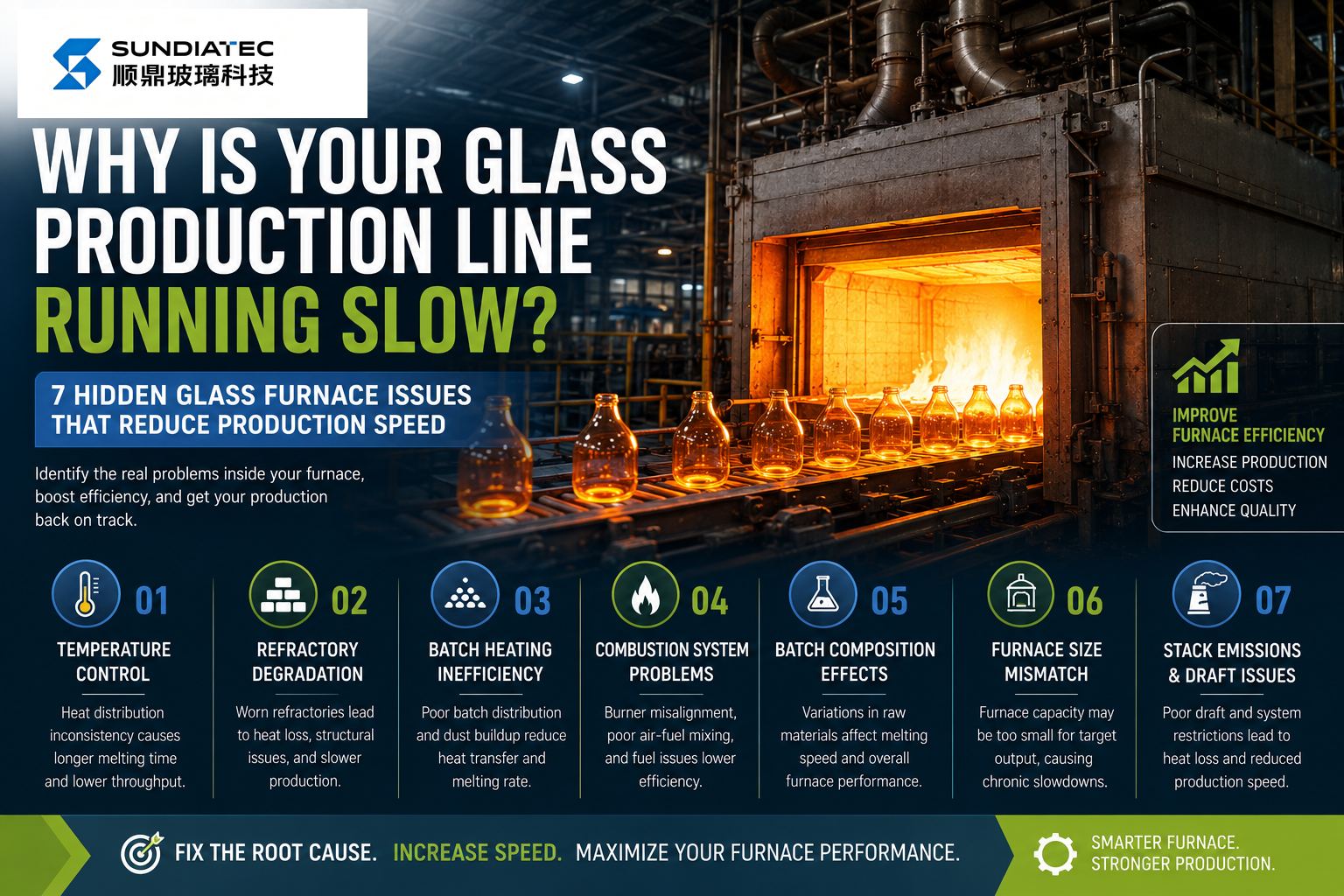
The Temperature Control Problem: A Silent Production Killer
Heat distribution inconsistency represents one of the most overlooked furnace issues affecting glass production speed. Your furnace might appear to maintain adequate temperature readings, but uneven heat distribution creates serious problems.
When temperature zones within your melting chamber vary by more than 50°C, you're looking at:
Incomplete glass fusion
Longer residence time for materials
Increased viscosity variations
Reduced material flow rates
Glass melting requires precise thermal control. Refractories—the heat-resistant materials lining your furnace—degrade over time. As refractory bricks erode, they create hot spots and cold zones. This thermal unevenness forces your batch to spend more time in the furnace, directly reducing production speed.
Modern glass manufacturers using advanced pyrometric systems can identify temperature inconsistencies that older monitoring methods miss entirely. If you're still using basic thermocouples, you might have significant heat distribution problems you don't know about.
Refractory Degradation: The Hidden Time Thief
Your furnace's refractory lining is constantly under attack. Every thermal cycle, every temperature fluctuation, and every chemical interaction wears down these materials. This degradation happens gradually, making it almost invisible to operational staff.
Refractory wear affects production speed in multiple ways:
Thermal Conductivity Loss: As refractories age, their ability to retain and transfer heat diminishes. This means your furnace needs longer heating periods to reach operating temperatures, delaying batch processing.
Structural Deterioration: Small cracks and erosion points develop in refractory materials. These create preferential flow paths where glass moves too quickly, preventing adequate melting and mixing.
Chemical Interaction: The batch (raw glass materials) reacts chemically with aging refractories. This process, called "refractory attack," generates impurities that contaminate your glass and slow the melting process.
A glass furnace with 10+ years of continuous operation typically shows 15-25% refractory wear. This directly translates to slower material processing and reduced throughput capacity.
Batch Heating Inefficiency: Why Materials Aren't Melting Fast Enough
The raw material batch entering your furnace needs to reach melting temperature quickly and uniformly. When batch heating becomes inefficient, your entire production speed suffers.
Poor batch distribution represents a common hidden problem. Materials need even exposure to radiant heat. If your batch is piling unevenly on the melting tank floor, portions receive inadequate thermal exposure. This means some materials remain partially fused while others sit idle, waiting to continue processing.
Dust and particulate buildup in your furnace chamber reduces radiative heat transfer. As combustion byproducts and airborne particles accumulate, they block thermal radiation from reaching the batch. Your furnace responds by increasing temperatures, consuming more fuel while paradoxically slowing production.
Regular furnace inspection would reveal this issue quickly, but many facilities don't conduct thorough internal inspections frequently enough. The consequence is a slow, consistent decline in production speed that's difficult to pinpoint.
Combustion System Problems: The Engine Behind Your Production
Your furnace's combustion system drives the entire melting process. When combustion efficiency drops, glass production speed follows immediately.
Burner misalignment causes flame patterns to miss the batch or strike furnace walls inefficiently. This reduces actual thermal energy reaching materials by 10-20% while increasing fuel consumption. Your furnace consumes more energy but produces less usable heat for melting glass.
Fuel quality variations affect combustion characteristics. Natural gas composition fluctuations, fuel contamination, or supply pressure inconsistencies alter flame temperature and pattern. This creates the thermal inconsistencies that slow production.
Air-fuel mixing problems reduce combustion efficiency. When oxygen and fuel don't mix optimally, combustion becomes incomplete. Incomplete combustion generates lower flame temperatures and increases production time for each batch.
Glass manufacturers using advanced combustion monitoring systems can detect these issues within minutes. Without proper monitoring, you might operate at 70-80% combustion efficiency without realizing it.
Glass Batch Composition Effects: The Silent Performance Modifier
The composition of your batch—the raw material mixture—directly affects how quickly glass melts and flows. Small variations in batch composition create significant production speed changes.
Flux materials (like soda ash) lower melting temperatures and accelerate fusion. When flux percentages drift slightly, melting rates change dramatically. A 2% reduction in flux content can increase residence time by 15-20%.
Silica quality impacts melting uniformity. High-quality, consistent silica melts more completely at lower temperatures. Inferior silica or batches with high impurity content require longer processing times and higher temperatures to achieve target properties.
Colorants and additives introduce processing variables. Some additive combinations accelerate melting while others create stability challenges. Batch composition tracking often reveals production speed variations linked to material sourcing inconsistencies.
Furnace Size Mismatch: An Often-Ignored Capacity Issue
Your current furnace might simply be too small for target production demands. This isn't a malfunction—it's an architectural limitation masked as efficiency problems.
When furnace melting capacity can't accommodate desired output, materials spend longer in the furnace waiting to be processed. This appears as a speed reduction but actually reflects unrealistic expectations for equipment size.
Calculating true furnace melting capacity requires understanding:
Surface area available for melting
Thermal energy input capability
Optimal residence time for glass type
Actual cooling requirements
Many facilities operate furnaces beyond their genuine capacity, creating chronic slowdowns attributed to mechanical issues rather than fundamental design limitations.
Stack Emissions and Draft Problems: Thermal Energy Loss
Your furnace's exhaust system significantly impacts production efficiency. Poor stack draft reduces furnace pressure, preventing optimal fuel combustion and heat transfer.
Weak chimney draft forces your furnace to work harder to expel combustion gases. This increases fuel consumption while reducing effective thermal energy for melting. You're burning more fuel to produce less usable heat.
Emissions control system restrictions can inadvertently reduce furnace draft. While environmental compliance is essential, poorly designed emission systems create back-pressure that interferes with combustion efficiency.
Fouling and scale buildup in exhaust passages blocks gas flow, reducing draft and furnace efficiency. Regular cleaning of internal furnace passages and exhaust systems prevents this hidden performance drain.
Practical Solutions for Immediate Improvement
Start with a professional furnace energy audit. Specialists can identify specific inefficiencies affecting your production speed within days.
Implement temperature monitoring systems that track multiple furnace zones simultaneously. This reveals thermal inconsistencies before they impact production significantly.
Schedule preventive refractory inspection every 18-24 months for active furnaces. Early detection of wear allows planned replacement rather than emergency downtime.
Optimize batch composition through systematic testing. Small adjustments to flux ratios or material sourcing often yield 5-10% production speed improvements.
Maintain combustion equipment on strict schedules. Burner cleaning, air-fuel calibration, and fuel system maintenance prevent gradual efficiency loss.

Unlock Your Exclusive Glass Production Solution!